The Courts Cannot Save Us

Last week, the United States Supreme Court once again stayed lower court restrictions on mail-order abortion drugs, allowing mifepristone to continue being prescribed through telehealth and shipped through the mail while litigation continues.
For many in the pro-life movement, the decision felt painfully familiar.
Another lawsuit.
Another emergency appeal.
Another temporary stay.
Another “wait and see.”
And meanwhile, abortion pills continue crossing state lines by the thousands every single day.
This moment should force the pro-life movement to confront an uncomfortable truth: if our strategy depends primarily on courts, regulations, and political compromise, then we are building on shifting sand.
The legal fight matters. Laws matter. Elections matter. But if the last several years have taught us anything, it is this: a movement built only on regulating abortion will eventually lose to a culture that still refuses to recognize the humanity of the child.
Dobbs Did Not End Abortion
When Roe v. Wade was overturned, many believed the nation had reached a turning point. Yet abortion did not disappear. In many places, it expanded.
Today, abortion is increasingly detached from clinics altogether. Chemical abortion now accounts for the majority of abortions in America, and mail-order distribution has become the new frontier.
A teenage girl can order pills online in secrecy.
A trafficked woman can be coerced into taking them.
A frightened college student can terminate her pregnancy alone in a dorm bathroom.
A woman can hemorrhage at home with no medical supervision.
And because abortion is now being reframed as merely “healthcare” or “medication management,” the humanity of the child disappears even further from public consciousness.
This is the unavoidable consequence of a movement that spent decades arguing over privacy rights, state authority, viability standards, and regulatory frameworks while often failing to insist on the most foundational truth:
The unborn child is a human person deserving of equal protection under the law.
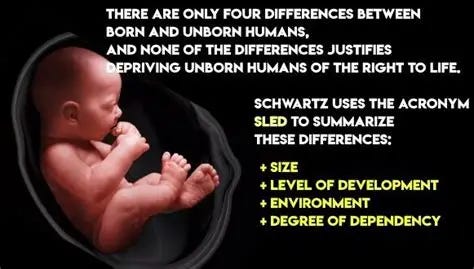
If They Are Persons, Everything Changes
Every major victory for abortion advocates depends on one underlying assumption: that the unborn child is not legally recognized as a person.
Without personhood, abortion becomes negotiable.
Without personhood, courts balance “rights.”
Without personhood, legislatures regulate killing instead of prohibiting it.
Without personhood, judges ask procedural questions instead of moral ones.
The pro-life movement has often accepted this framework without realizing it.
We fought for parental consent laws.
Waiting periods.
Ultrasound requirements.
Clinic regulations.
Gestational limits.
Some of those laws saved lives, and many were pursued with sincere compassion and courage. But none addressed the central injustice: the denial of personhood to the child.
No other class of human beings would be treated this way.
We would never argue that toddlers deserve “some protections after 15 weeks.”
We would never say a teenager may be intentionally killed if proper consent forms are signed.
We would never accept laws merely regulating the circumstances under which violence against born children occurs.
Yet for decades, much of the movement settled for incrementalism because personhood seemed politically impossible.
Now we are watching the consequences unfold in real time.
The Courts Will Continue to Fail
The current mifepristone litigation proves how fragile a court-centered strategy really is.
One federal court restricts mail-order abortion drugs.
Another court pauses the restriction.
The Supreme Court temporarily restores access.
The case goes back down again.
Then likely back up again.
Meanwhile, abortions continue uninterrupted.
Even if pro-life litigators eventually win portions of these cases, abortion advocates have already decentralized the industry. Pills are stockpiled. International suppliers exist. Shield laws protect abortion providers across state lines. Telehealth networks are deeply embedded.
You cannot regulate your way out of a civilization that no longer believes unborn children are persons.
And courts—by design—reflect the moral assumptions of the culture around them.
Yet We Must Serve in the Reality We Have
Recognizing this failure does not mean retreating from the battlefield.
Quite the opposite.
Those of us serving women every day in pregnancy centers, maternity homes, churches, sidewalk ministries, and post-abortion recovery programs must deal honestly with the world as it actually exists right now.
Mail-order abortion drugs are here.
Women are taking them alone.
Complications are real.
Fear is real.
Isolation is real.
And while courts deliberate, women bleed.
That means the mission before us is urgent.
We must expand compassionate intervention.
We must educate women on the physical dangers and emotional trauma associated with chemical abortion.
We must offer Abortion Pill Reversal to women who regret taking the first drug and desperately want another chance.
We must prepare churches and pregnancy centers to respond compassionately to chemical abortion trauma and miscarriage management.
We must provide practical care, grief support, medical referrals, housing assistance, father engagement, and long-term discipleship.
This is not theoretical anymore.
The abortion industry has moved into women’s homes.
So the rescue movement must move there too.
Compassion and Conviction Must Stay Together
Some activists fear that emphasizing personhood sounds too “extreme.”
Others fear compassionate outreach sounds too “soft.”
Both are wrong.
Truth without compassion becomes political rhetoric.
Compassion without truth becomes surrender.
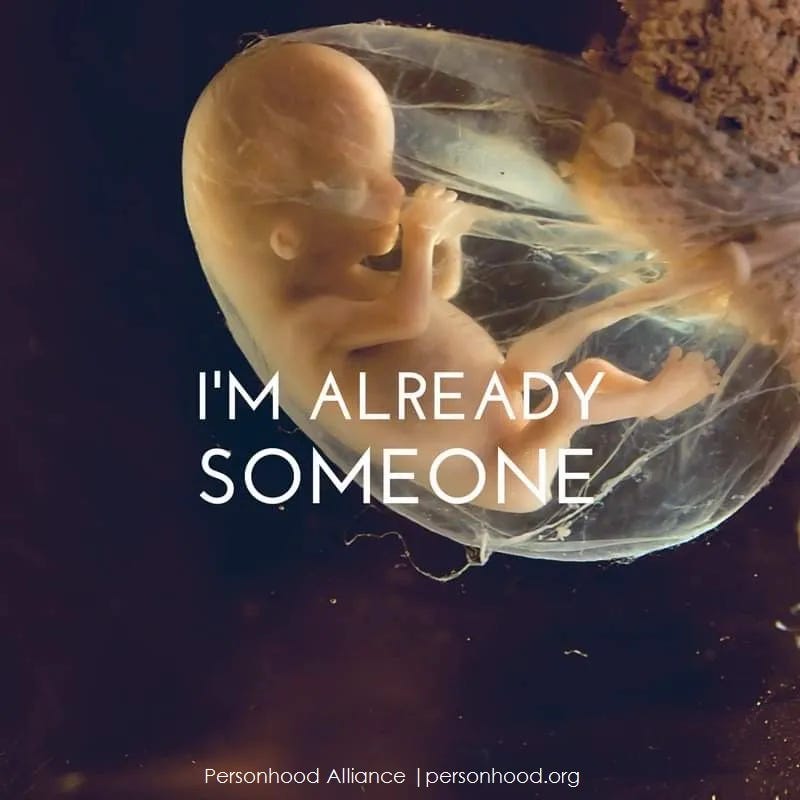
The child in the womb is a person.
The frightened mother is also a person.
A truly pro-life movement refuses to abandon either one.
That means we reject the lie that women are enemies.
Most women seeking abortion are afraid, abandoned, pressured, misled, or desperate. The abortion industry profits from that fear while offering isolation as empowerment.
The answer is not condemnation.
The answer is courageous love anchored in truth.
The Future of the Pro-Life Movement
The pro-life movement now stands at a crossroads.
One path continues the cycle of lawsuits, temporary injunctions, narrow regulations, and political bargaining while abortion technology advances faster than legislation can keep up.
The other path insists clearly and unapologetically that every unborn child is a human person entitled to equal protection under the law.
That path will cost more.
It will sound more radical.
It will invite criticism from both political parties.
But it is the only intellectually honest foundation for lasting justice.
And while we labor toward that goal, we must simultaneously serve women living in the painful reality of unrestricted abortion pill access today.
The courtroom matters.
The legislature matters.
But neither can secure justice while the law itself refuses to answer the most important question: Who is the child?
If the unborn child is merely “potential life,” then every protection will always be temporary, negotiable, and vulnerable to the next court ruling, election cycle, or pharmaceutical workaround. But if the child in the womb is a human being from the moment of fertilization—whole, living, genetically distinct, and created in the image of God—then justice demands more than regulation. Justice demands recognition.
Human rights do not begin at viability.
They do not begin at birth.
They do not begin when a mother feels ready.
They begin when a human life begins.
And science has already answered that question.
From fertilization, there exists a new and unique human being—not part of the mother’s body, not a “potential” child, but a child with his or her own DNA, sex, blood type, and developmental trajectory. Every argument for abortion rights ultimately depends upon denying the personhood of that child.
That is why the battle before us is not ultimately about pills, politics, or court procedures. It is about whether our nation will continue to deny legal protection to an entire class of human beings because they are small, dependent, and unseen.
No civilization can remain just while declaring that some human lives are persons and others are not.
And so we continue the work before us:
to rescue,
to serve,
to love,
to intervene,
to offer hope to frightened mothers,
and to proclaim without apology that every child—born and unborn—is fully human and fully deserving of protection under the law.
Until America recognizes the personhood of the unborn from the moment of fertilization, every legal victory will remain fragile, and every generation of children will remain at risk.